From Settlements to Megalopolis - Part 1/3
A brief history of urban mobility across the ages
Part I: From the first paths to the medieval city
Since the dawn of man, there was a path. Not a road, not a street. A worn strip of earth traced by repeated human movement between two points that mattered. A water source and a shelter. A field and a market. A home and a temple. Walking from A to B. Long before cities had names, transportation has been part of daily human activities.
The history of urban mobility is not a history of vehicles or infrastructure, but of problems and solutions. Each era inherited a city whose scale exceeded the mobility solutions of the previous one, and each era improvised, innovated, or collapsed trying to close that gap. What we call "urban mobility" today is the latest answer to a question that is at least ten thousand years old: how do we move enough people, goods, and ideas across a shared and limited space to make collective life possible?
And so does this journey. FromTo Academy begins where every city began: with a single path. Our aim is to start From the very basics, from a simple question, To more complex concepts, models, and methods, walked one step at a time.
The best way of starting is to look at the past and investigate how people from different contexts, eras, tools, and technologies tried to solve transport-related problems. This is the first of three essays that focus on the history of transport, from the first permanent settlements through the medieval city, then through the industrial rupture, to finally reach the modern megacities of our own time. No single article can do justice to the full sweep of this history. The goal, instead, is to identify the recurring logic underneath it: the city grows, behavior changes, but transport is still a key solution or bottleneck to our needs, and someone (an engineer, a planner, a ruler, or simply a mason paving a muddy alley), finds a way through.
The first settlements: when proximity was the solution
It is impossible to segregate the history of humankind from transport. For most of human prehistory, moving was a question of survival. As natural resources are unevenly distributed in space, hunter-gatherer bands needed to relocate entirely, following herds, seasons, and water. Here lies the original sin of unequal access to opportunities, committed long before there were planners to fix it — older than cities, markets, or than anyone to blame for it.
As a solution, paths have been built, but there was no urban transport because there was no permanent urban form. The question of how to move within a settlement only became meaningful once people decided to stay.
The earliest permanent settlements, emerging in the Fertile Crescent around 10,000 BC, were small enough that proximity did most of the work. Çatalhöyük, one of the oldest known proto-urban sites in Anatolia, housed perhaps eight thousand people in densely packed mud-brick structures with no streets at all. Access was through rooftops and ladders. Movement was vertical before it was horizontal. The city, such as it was, required no transport system because no point was more than a few dozen meters from any other.
Things changed as settlements grew. The first genuinely urban centers — Uruk, Ur, Mohenjo-daro — reached populations of tens of thousands within a few centuries. Population growth came with sprawl. Density was limited by building technology. At that scale, proximity alone fails. A farmer on the periphery of Uruk cannot simply walk to the temple granary and back between sunrise and sunset without losing the better part of a working day. The city begins to impose a cost on movement, and that cost shapes how life is organized inside it.
The first transport problem is not speed — it is distance. When a settlement grows beyond what a person can cross on foot in a reasonable time, the settlement must either shrink, sprawl, or invent a better way to move.
The Sumerians responded with canals. Uruk's network of irrigation channels was also its primary freight system: boats carried grain, timber, and stone across a flat alluvial plain that offered no other efficient surface for heavy loads. The wheel, invented around 3,500 BC in the same region, transformed overland movement — but the earliest wheeled vehicles were slow, heavy ox-carts suited to bulk cargo rather than people. Urban mobility, in these first cities, was fundamentally a logistics problem, not a passenger problem.
Classical antiquity: engineering the urban network
During the upcoming centuries, regional transport flourished. Coast navigation stitched together the Mediterranean world, while overland arteries like the Silk Road, the Amber Road, the Incense Route, and Persia's Royal Road connected civilizations separated by deserts and mountain ranges. Yet cities themselves grew denser, wealthier, and increasingly difficult to move through. Urban transport had not kept pace. Roads were built to move armies and goods across empires, not people within cities. Rome is the clearest example: its legendary road network was, at its core, a military instrument. Yet the same infrastructure that served conquest created something unintended: a connected urban system in which goods, information, and people circulated at speeds and scales the ancient world had never seen. The city benefited from the empire's logistics without having solved its own.
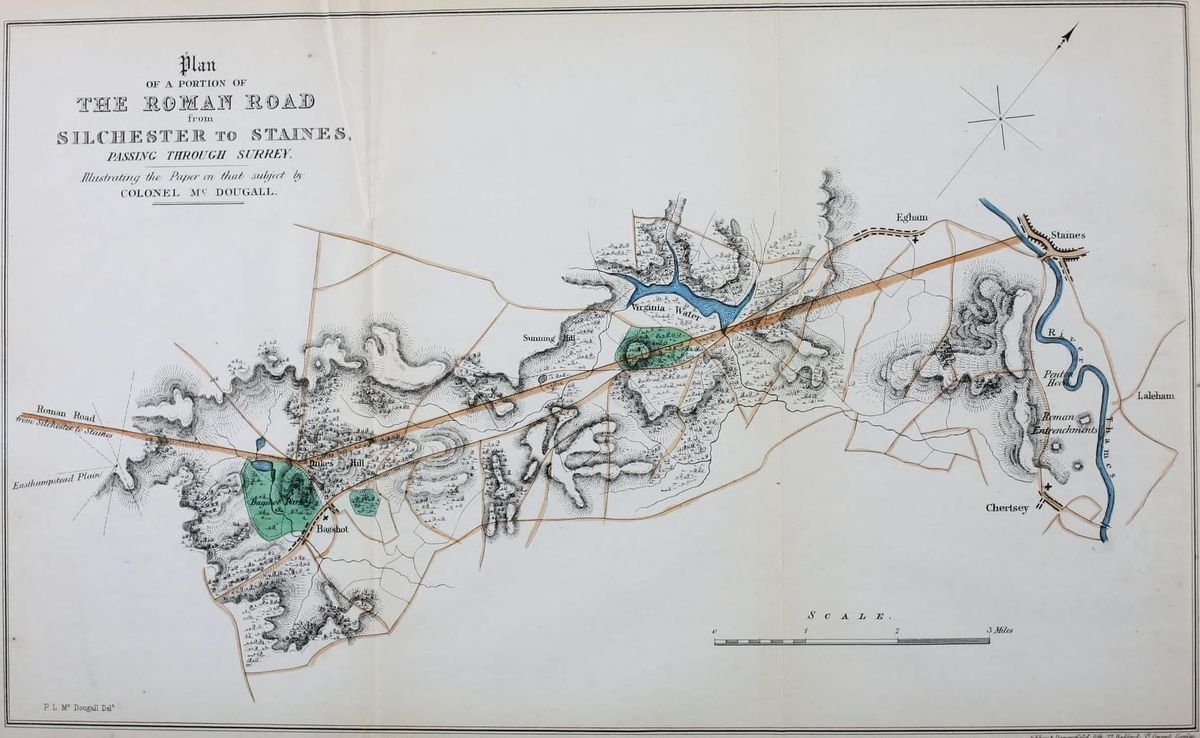
At its peak, the Roman road network stretched over 400,000 kilometers, linking a civilization of perhaps 70 million people. Inside Rome itself — a city of one million at the height of the empire — the challenge was different and, in many ways, more difficult. The city was dense, its streets narrow and irregular, its hills steep. Julius Caesar famously banned wheeled vehicles from the city center during daylight hours (Lex Julia Municipalis), not out of environmental concern but because the congestion had become paralyzing. The world's first recorded traffic policy was, essentially, a downtown driving restriction. More than two thousand years later, cities still face similar decision-making challenges.
What Rome understood, and what would be forgotten and rediscovered many times over, is that urban mobility is a system. The via Appia meant nothing without the milestones, the mansiones (waystation inns placed at regular intervals) and the cursus publicus, the state postal and transport service that coordinated movement across the network. Infrastructure alone does not produce mobility; it requires operation, maintenance, and institutional organization to function.
Rome's greatest transport legacy was not the road itself, but the idea that movement could be systematically planned, built, and managed at the scale of a civilization. That idea would take more than a millennium to fully resurface.
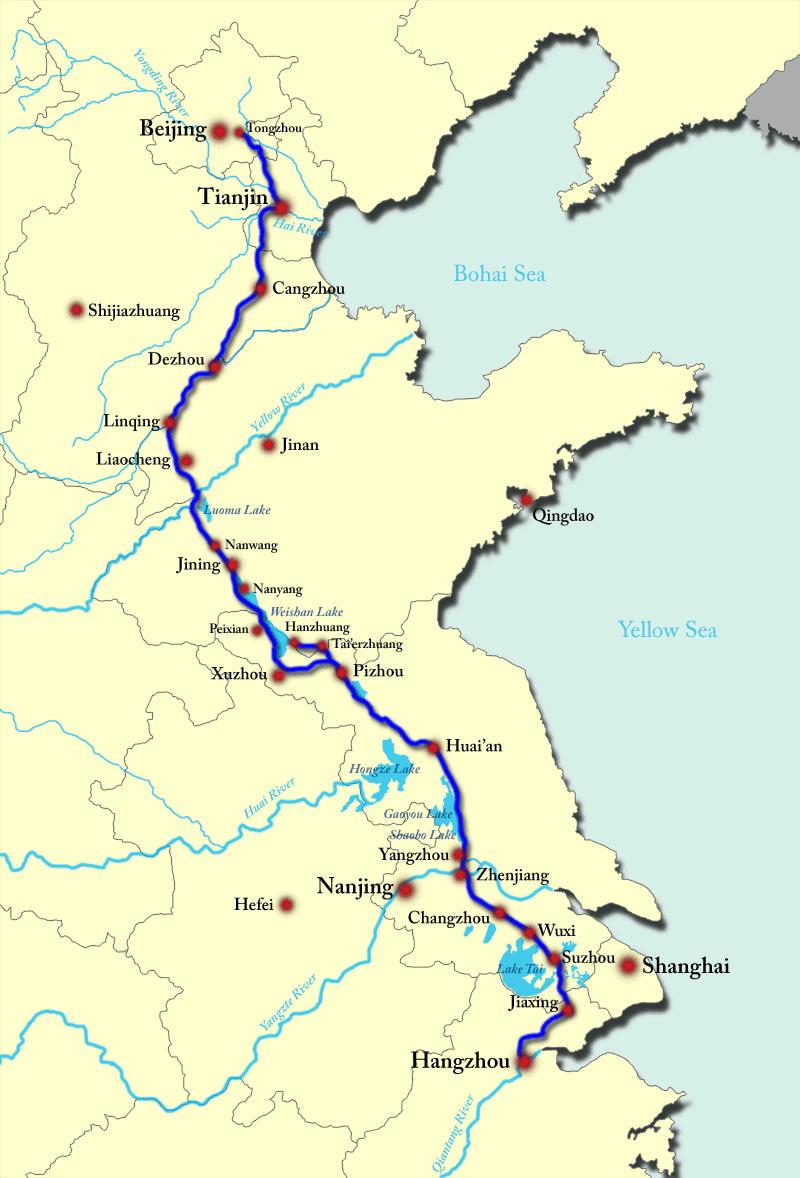
But Rome was not alone in discovering this logic. Half a world away, and largely independent of Mediterranean developments, China reached similar conclusions through different means. The Grand Canal, begun in the 5th century BC and expanded across successive dynasties, eventually stretched over 1,800 kilometers — the longest artificial waterway in the world. It served simultaneously as a freight corridor, a military supply line, and the connective tissue of an imperial economy. Cities along its banks grew precisely because they sat at points of access on the network. Location, in the urban sense, has always been fundamentally about transport.
But imperial scale was not the only answer. Greek city-states, by contrast, tended toward smaller, denser forms shaped by the geography of the Aegean. The agora — the central public space around which civic life organized itself — placed essential functions within walking distance of most residents. Athens at its classical peak housed perhaps 300,000 people in the greater urban area, but the city's core was compact enough to be navigated on foot. The Greek urban model was less a transport problem and more an accessibility solution: bring everything close enough that movement becomes trivial.
The medieval city: organic growth and its limits
The collapse of the Western Roman Empire did not simply destroy roads and aqueducts. It dismantled the institutional frameworks that made large-scale urban systems functional — a lesson that remains uncomfortably relevant to any city today that builds infrastructure faster than it builds the institutions to run it. Cities contracted dramatically. Rome itself fell from a million inhabitants to perhaps 20,000 by the 6th century AD. The transport infrastructure remained, in ruins, but there was no longer the organizational capacity to maintain it, and no longer the population density that would justify doing so. Infrastructure without institutions is just stone.
Medieval European cities grew back slowly, organically, and largely without plan. Their street patterns reflected negotiation rather than design: a path follows a property boundary, a boundary follows a watercourse, a watercourse follows the terrain. City boundaries were limited by walls, segregating urban from rural or semi-rural areas around the city core. The result was the dense, irregular, often bewildering urban fabric that survives in the historic cores of cities like Bologna, Bruges, or the old city of Jerusalem. These streets were not designed for vehicles. They were designed for people on foot and, occasionally, pack animals. From the accessibility perspective, it was close to perfect. Mobility was not.
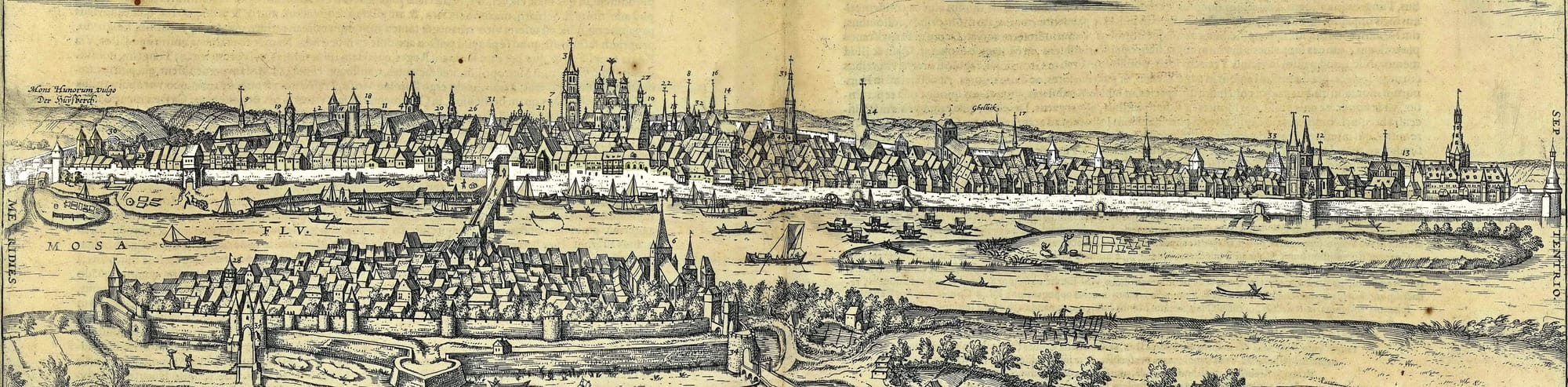
This matters because scale and mobility are inseparable. A medieval city of 50,000 people occupying two square kilometers has an average density high enough that most residents can reach most destinations on foot within fifteen or twenty minutes. The city does not need a formal transport system because the city is, itself, the transport system — the arrangement of its buildings and streets is the infrastructure. Movement is embedded in urban form rather than layered on top of it.
In the medieval city, the street is not a channel for movement — it is the city's living room, its marketplace, its social interface. The distinction between movement space and activity space barely exists. That confusion, seen from a modern engineering perspective, was also the city's greatest strength.
But medieval cities also hit hard limits. As trade routes reopened in the 11th and 12th centuries and commercial activity intensified, cities like Venice, Ghent, and Lübeck grew rapidly and developed increasingly sophisticated transport arrangements. Venice, built on water, evolved an entire urban logic around the gondola and the boat: its canals were streets, its bridges were intersections, its logistics were inseparable from its geography. Lübeck developed a network of covered passage systems — the Gänge — to move goods between warehouses without clogging the main streets. Every city, faced with growth, improvised.
By the late medieval period, the largest European cities — Paris, London, and Florence — were pushing against the physical limits of what a walking city could sustain. Paris in 1300 may have housed 200,000 people. Moving food into that city, moving waste out of it, moving people and goods within it — these were not incidental problems. They were the central operational challenge of urban governance. The city was becoming, for the first time in Europe since Rome, something that required deliberate management of movement at scale.
Te threshold
From Çatalhöyük to medieval Paris, the story of urban mobility is a story of thresholds. Each time a settlement crossed a scale barrier — from village to town, from town to city, from city to metropolis — the existing solution for movement broke down, and a new one had to be invented. Sometimes the invention came in time. Sometimes the city declined instead.
What is striking, across ten millennia of urban development, is how consistent the underlying logic remains. Cities concentrate people and activities because concentration creates value: economic, social, cultural. But concentration also creates friction: the friction of people trying to be in the same place, or to move between places, at the same time. Transport is the technology of reducing that friction. It is, in the most literal sense, what keeps a city from choking on its own success.
The solutions available to a Sumerian canal builder and a Roman road engineer and a Venetian gondolier were radically different. But the problem they were solving was the same. And then, in the early nineteenth century, something happened that changed the terms of that problem more profoundly than anything in the previous ten thousand years. Coal burned, steam moved, and the industrial city was born: a form of urban concentration so dense, so fast-growing, and so dependent on long-distance movement that the old solutions were not merely inadequate. They were obsolete.
That rupture, and the new discipline it eventually produced, is where we turn next.
Up next : The Industrial City: Steam, Rails, and the Birth of Modern Transit. How coal and the locomotive transformed urban scale and made transport engineering a discipline.
References
Vuchic, V. R. (2007). Urban Transit: Operations, Planning and Economics. John Wiley & Sons.