From Settlements to Megalopolis - Part 3
A brief history of urban mobility across the ages
Part III: The megacity and the engineer's dilemma
In 1950, there were two cities in the world with a population exceeding ten million people: New York and Tokyo. By 2024, there were thirty-five. The megacity, a term that did not exist in the vocabulary of urban planning before the second half of the 20th century, has become the defining form of human settlement in our time. More people now live in cities than in rural areas, and the growth is not slowing. By 2050, the United Nations projects that two thirds of humanity will be urban. The question concerning transport engineers still remains: how do we move enough people across a shared space to make collective life possible?
The megacity is not simply a large city. It is a qualitatively different kind of urban organism, one that breaks many of the assumptions that guided transport planning through the industrial era. The distances involved exceed the comfortable reach of any single mode. The population densities vary enormously within the same metropolitan area, from hyper-dense historic cores to sprawling low-density peripheries that would be unrecognizable to a 19th-century planner. The social and economic inequalities are frequently extreme, producing transport networks that serve some populations with extraordinary sophistication and others barely at all. And the environmental pressures such as carbon emissions, air quality, land consumption, have become a urgent matter.
This final essay traces how different megacities have confronted these challenges, what their experiences reveal about the possibilities and limits of transport planning, and why the answers they have found, or failed to find, matter to anyone who wants to understand, and eventually practice, the discipline that emerged to address them.
The scale no one planned for
The growth of the contemporary megacity has been, in many cases, faster than any institution could manage. Lagos, Nigeria's largest city, housed roughly 760,000 people at independence in 1960. Today it is home to somewhere between 15 and 22 million. The uncertainty in that figure is itself a measure of the scale of the challenge. Dhaka, the capital of Bangladesh, grew from 350,000 in 1950 to over 24 million today, absorbing millions of rural migrants in decades rather than centuries. Shanghai, already a major city in 1950, has more than tripled in population since economic reforms began in the 1980s, and now anchors a metropolitan region of over 30 million people.
In each of these cases, the city grew faster than its transport infrastructure. Roads designed for hundreds of thousands of vehicles now carry millions. Metro systems planned for one phase of growth are immediately overwhelmed by the next. Bus networks improvise routes through neighborhoods that did not exist when the last transport plan was written. The result is not chaos in the colloquial sense. These cities function because millions of people move through them every day. But there is a chronic, structural mismatch between demand and supply that imposes enormous costs: in time lost to congestion, in productivity sacrificed to inaccessibility, in health outcomes degraded by pollution, and in economic opportunity denied to those who cannot afford to bridge the gap between where they live and where the jobs are.
The megacity did not grow despite its transport problems — it grew through them. Congestion, overcrowding, and informality are not signs of failure. They are signs of a city absorbing more people than its infrastructure was designed to serve, and doing so without collapsing. That resilience deserves more analytical respect than it typically receives.
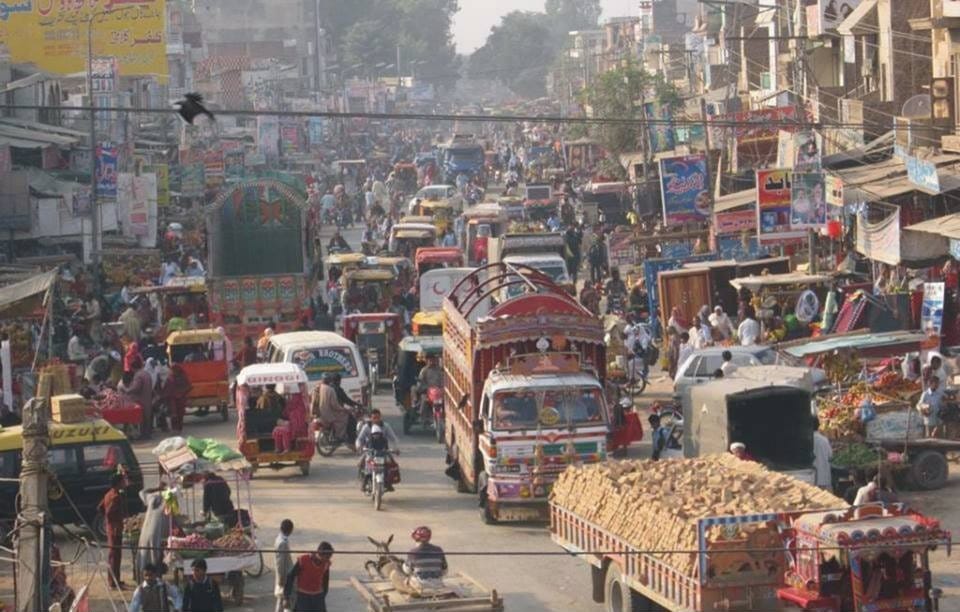
Glaeser, in Triumph of the City, argues that the density and apparent disorder of cities like Mumbai or São Paulo should not be read primarily as dysfunction. Dense cities, however imperfect, offer their residents something that rural areas and low-density suburbs cannot: the expectation of proximity to opportunities. The informal minibus that fills the gap left by an absent formal transit system, the motorcycle taxi that navigates where no bus route reaches... these are not symptoms of a broken city. They are entrepreneurial responses to a real demand, evidence that the city's promise of access is powerful enough to generate its own, improvised supply. The transport planner who dismisses informality as a problem to be eliminated misses the logic underneath it.
When it works: Tokyo, Singapore, Hong Kong
Not all megacities are defined by their transport failures. A small number have built systems of such sophistication that they have become, for transport planners worldwide, the benchmark against which everything else is measured. Tokyo, Singapore, and Hong Kong represent, in different ways, what urban mobility can look like when political will, institutional capacity, and sustained investment align over decades.
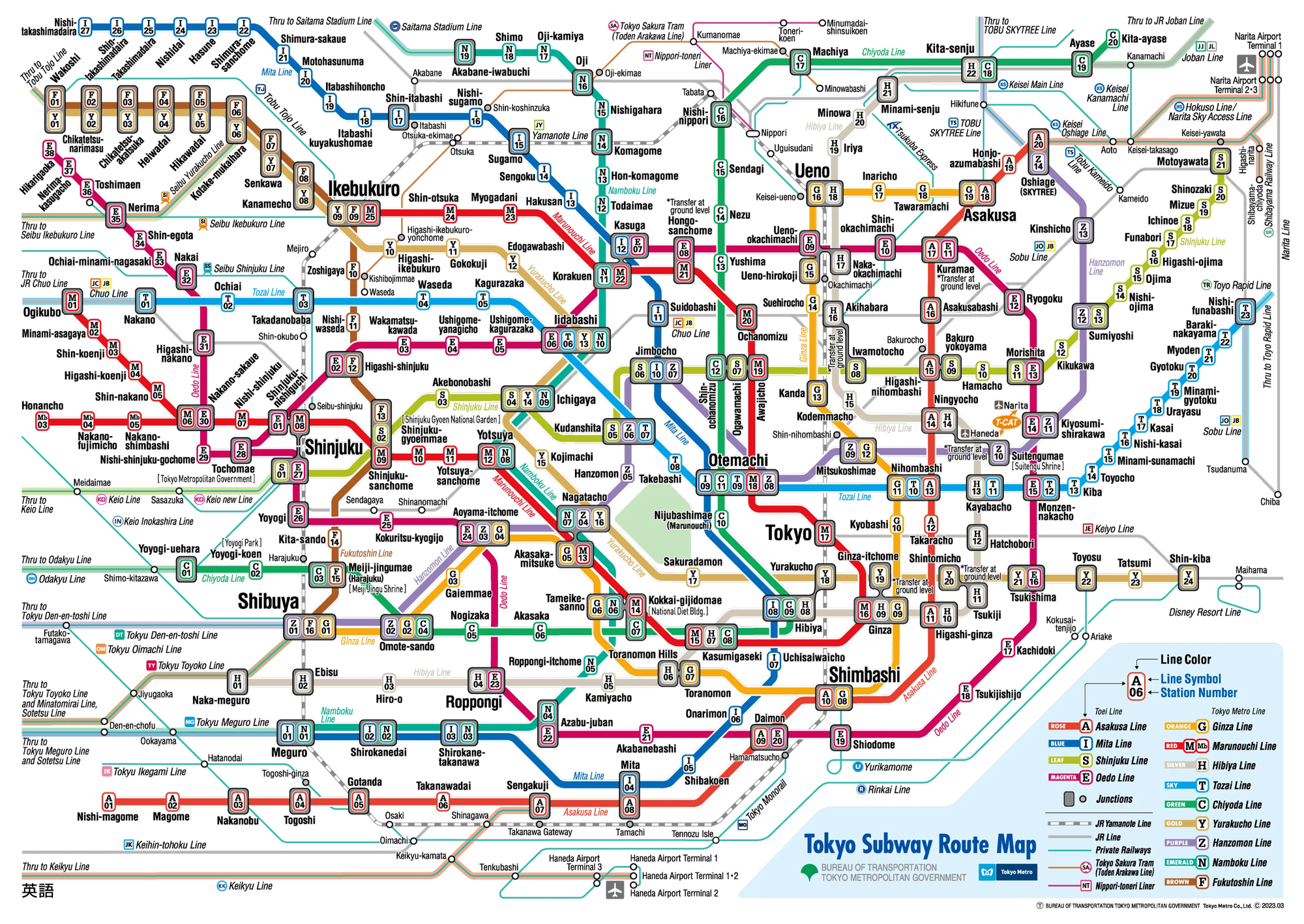
Tokyo's transport system is, by most measures, the most complex and heavily used in the world. The greater metropolitan area is the home to over 37 million people and is served by an interlocking network of metro lines, commuter railways, buses, and monorails operated by dozens of public and private companies, coordinated through a single integrated ticketing system. Trains run on schedules measured in seconds. Station design is optimized for the millions of daily transfers between lines. And the network is profitable! An outcome achieved in part by developing commercial real estate above and around stations, creating a virtuous cycle in which transit investment generates the density that justifies further transit investment.
Singapore offers a different model: a city-state small enough to plan comprehensively, and governed with sufficient authority to make the hard choices that larger democracies frequently defer. Car ownership is deliberately restricted through a system of certificates that makes purchasing a vehicle expensive. A policy that would be politically impossible in most cities but that has kept Singapore's roads relatively uncongested while its Mass Rapid Transit system has become the primary mode for the majority of trips. The lesson Singapore offers is not that its specific policies are universally applicable, but that transport outcomes are inseparable from land use decisions, pricing decisions, and political decisions made decades in advance.
The cities that have solved urban mobility — to the extent that any city has — did not do so with better vehicles or smarter technology alone. They did so with better institutions, longer planning horizons, and the political courage to price private vehicle use honestly.
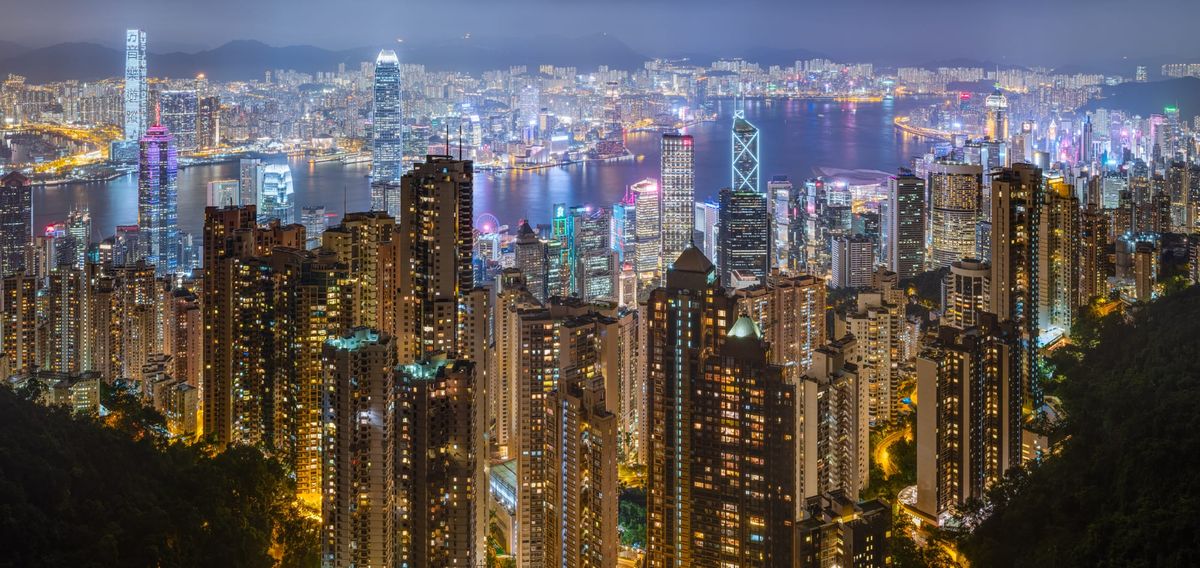
Hong Kong presents perhaps the most instructive case for the relationship between density and transit. With a population of over seven million in a territory of just over 1,000 square kilometers, Hong Kong has achieved transit modal shares that most cities consider unimaginable: over 90% of daily trips are made by public transport. The MTR Corporation, which operates the metro, is consistently ranked among the most efficient transit operators in the world and also generates a profit. The secret, if there is one, is density maintained deliberately through land use policy, and a transit network designed not just to move people but to shape the city around itself.
When it doesn't: São Paulo, Lagos, Delhi
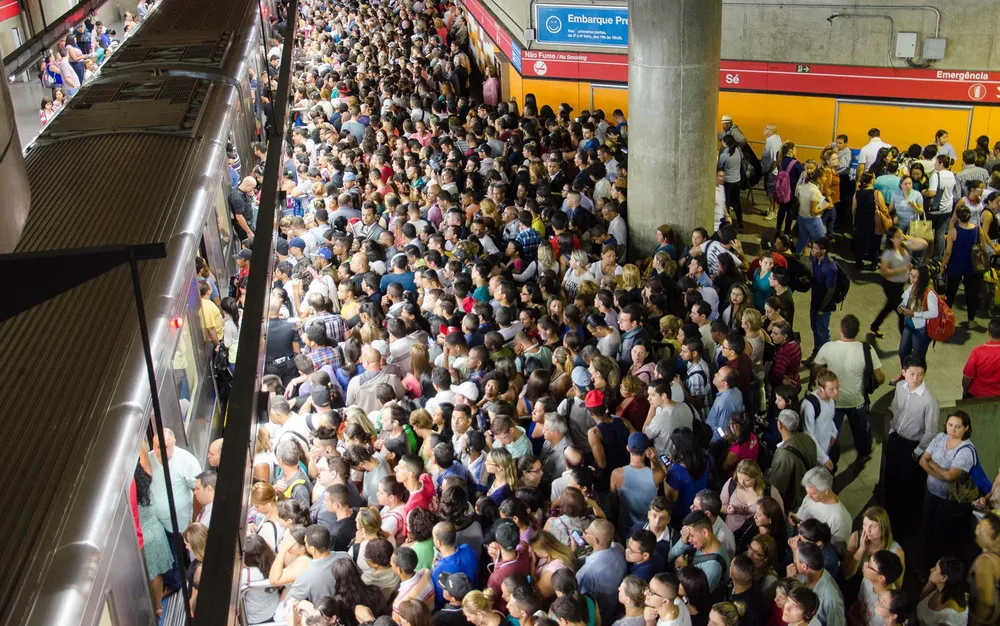
São Paulo is a city that contains, within its boundaries, almost every transport problem that the 20th century produced. A metropolitan area of over 21 million people, it was built, like most Brazilian cities, around the automobile during the decades of rapid industrialization following World War II. Its road network is vast; its metro system, by contrast, is modest relative to the city's size, covering a fraction of the territory that a city of this density would require. The result is a metropolis in which the wealthiest residents travel by helicopter between helipads atop office buildings and residential towers. A mode of urban transport that would have seemed like science fiction to any previous generation. Meanwhile the poorest spend three to four hours a day on overcrowded buses navigating the same congested arterials that private cars have failed to unclog for decades.
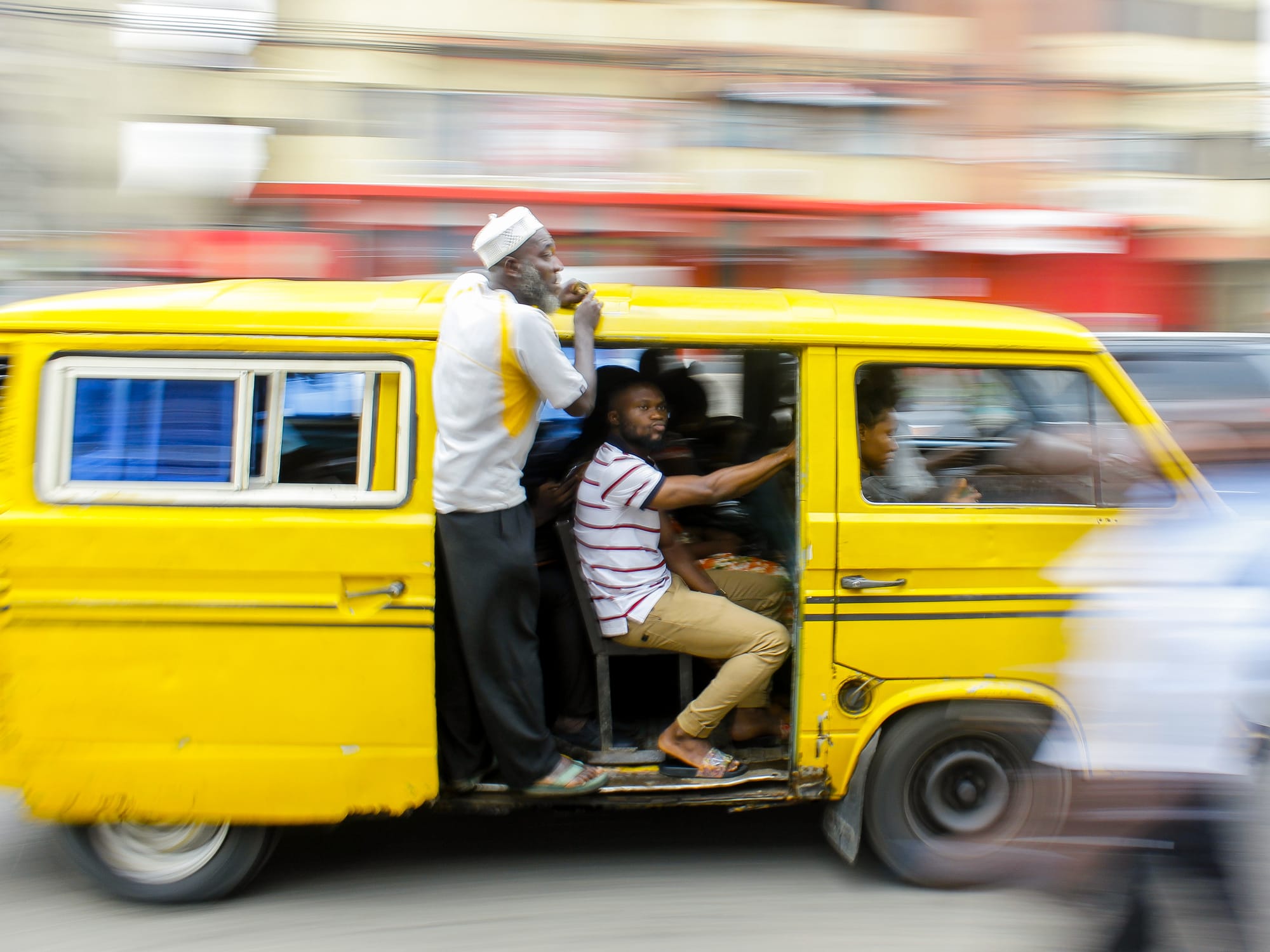
Lagos presents the same structural tension at a different institutional scale. Nigeria's largest city has grown so fast that formal planning has perpetually lagged behind reality. Its transport system is dominated by the danfo (yellow minibuses operated by private entrepreneurs along informal routes) supplemented more recently by a Bus Rapid Transit corridor and a light rail line that represents the beginning, rather than the completion, of a formal network. The BRT, opened in 2008, was celebrated as one of the most successful rapid transit implementations in sub-Saharan Africa: high frequency, dedicated lanes, significant ridership. It was also, from the moment of opening, insufficient for the demand it faced. The city continued to grow faster than the infrastructure designed to serve it.
Delhi, the world's second-largest city by some estimates, has made the most dramatic formal investment in transit of any South Asian megacity. Its metro, opened in 2002 and expanded aggressively in subsequent years, now stretches over 390 kilometers, one of the longest networks in the world. Yet even this extraordinary infrastructure serves only a fraction of the city's daily trips. The majority of Delhi's residents still depend on overcrowded buses, auto-rickshaws, and on foot for most of their movement. The metro is a genuine achievement; it is also a reminder that in a city growing by hundreds of thousands of people per year, investment that would transform a smaller city barely keeps pace with growth.
In cities like São Paulo, Lagos, and Delhi, the transport problem is not primarily technical. The vehicles exist, the engineering knowledge exists, the financing mechanisms exist. What is scarce is the institutional capacity to deploy them at the speed and scale that urban growth demands — and the political will to make the land use and pricing decisions that would make transit viable across the full metropolitan area.
The same question, ten thousand years later
What separates Tokyo from Lagos, or Singapore from São Paulo, is not geography, or culture, or even wealth alone — though wealth matters enormously. It is, above all, the quality and continuity of the institutions responsible for planning, building, and operating urban transport systems over long periods of time. Vuchic, in Urban Transit, makes this point with characteristic directness: the cities that have achieved high-quality transit systems are those that have treated transit as a long-term public investment, not as a short-term political expenditure. The cities that have failed to do so have paid, and continue to pay, the cost in congestion, inequality, and lost economic potential.
But there is a deeper continuity running through all of these cases, connecting the megacity of the 21st century to the Sumerian canal network and the Roman road. The question is always the same: how do we move enough people across a shared space to make collective life possible? The scale has changed beyond anything any previous civilization would recognize. However, the tools have multiplied. The environmental stakes have risen to a point where the choice of transport system is no longer merely an urban question but a planetary one. And yet the logic that connects transport to urban form, urban form to economic opportunity, and economic opportunity to social equity has remained remarkably constant across ten thousand years of cities.
That logic, and the models, methods, and tools that transport engineers use to analyze, predict, and intervene in it, is what FromTo is about.
The engineer's dilemma
There is a tempting narrative in which the history of urban transport is a story of progress: each era's solution superseding the previous one, each technology more powerful and more equitable than the last. The canal gave way to the railway; the horse to the tram; the tram to the metro; and now, perhaps, the private car will give way to shared, electric, autonomous mobility... and the cycle of improvement will continue indefinitely.
That narrative is not entirely wrong. Urban transport systems have, on average, become faster, safer, and more widely accessible over time. But it obscures something equally important: every transport solution has produced consequences that its designers did not anticipate and could not fully control. The Roman road served military conquest. The industrial railway shattered urban communities in its path. The automobile produced the very congestion it promised to eliminate. Each solution carried within it the seeds of the next problem.
The transport engineer who enters this field today inherits that history, its achievements and its failures in equal measure. She works with tools of extraordinary analytical power: models that can simulate the travel behavior of millions of people, algorithms that can optimize network design across thousands of variables, data streams that capture movement in real time at a scale that would have seemed miraculous to any previous generation. And yet the fundamental challenge has not changed: how to move people efficiently and equitably through a city that is always larger, always more complex, and always more contested than any plan anticipated.
There is no single answer to that challenge. There never was. What the megacity makes clear, and more starkly than any previous urban form, is that transport is not a technical problem with a technical solution. It is a political problem, an economic problem, a social problem, and a technical problem simultaneously, and the engineer who loses sight of any one of those dimensions will solve the others at its expense. The bias toward mobility over accessibility that shaped a generation of traffic engineers was not an accident or a mistake. It was a choice, made under particular political and economic conditions, by people with particular assumptions about who cities were for. Recognizing that bias, understanding where it came from, and learning to work against it when the evidence demands it: that is part of what it means to practice transport engineering seriously today.
The city always grows faster than the plan. The engineer's job is not to produce a perfect solution — it is to understand the problem well enough to produce a better one, and to remain honest about the difference.
That is where this prologue ends, and where this Project begins. From the first worn path between a shelter and a water source, To the 37-million-person metropolitan organism of Greater Tokyo, the question has always been the same. What changes is the precision with which you can ask it, and the rigor with which you can begin to answer.
References
Vuchic, V. R. (2007). Urban Transit: Operations, Planning and Economics. John Wiley & Sons.
Glaeser, E. (2011). Triumph of the City: How Our Greatest Invention Makes Us Richer, Smarter, Greener, Healthier, and Happier. Penguin Press.