From Settlements to Megalopolis - Part 2/3
From Settlements to Megalopolis
A brief history of urban mobility across the ages
Part II: The industrial city, the automobile, and the birth of modern transit
In the previous essay, we followed ten thousand years of urban life held together by one simple constraint: the pace of a human on foot. Every solution, such as the Grand Canal of China, the Roman roads, the medieval streets, was ultimately measured against the same biological baseline. Cities could grow, but only as far as legs, animals, and boats would allow. That limit held for most of recorded history. And then, in a matter of decades, it was gone.
The Industrial Revolution did not merely introduce new vehicles. It changed the fundamental terms of the urban equation. For the first time in history, mechanical energy was cheap, scalable, and easier to overcome the terrain. It could move people and goods faster than any animal, over distances that would have been unthinkable to a medieval planner. The city that emerged from this rupture was not simply larger than what came before. It was a different kind of organism entirely: one whose survival depended, from the outset, on an engineered transport system.
This is the story of that transformation: from the first steam locomotive to the suburban freeway, from the horse-drawn omnibus to the underground metro. It is a story of extraordinary ingenuity and, in equal measure, of consequences that took a century to fully understand.
Steam and the industrial city: when scale became a problem of survival
Manchester in 1800 was a town of roughly 25,000 people. By 1850, it had become a city of 300,000. No walking city could have absorbed that growth without mass transportation system. The cotton mills and coal furnaces that drove industrialization also drove one of the fastest urban expansions in human history, pulling workers from rural areas into dense, poorly ventilated, and overcrowded buildings. The city grew faster than any available solution for moving people within it.
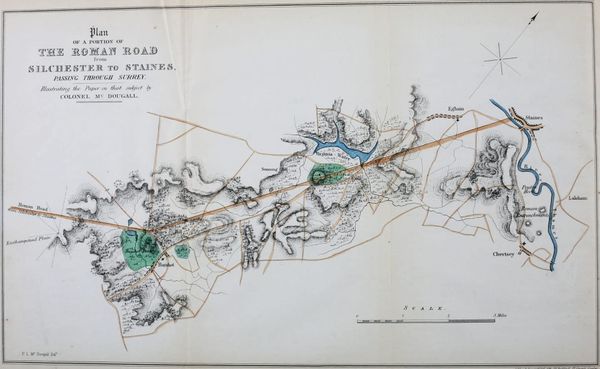
The steam locomotive, first operated commercially in 1825 on the Stockton and Darlington Railway, was not designed for urban passengers. It was, like the Roman road before it, a freight instrument, a way of moving coal from mines to ports more efficiently than canals allowed. But the same technology that served industry also created a new urban geography. Cities connected by rail grew; cities bypassed by rail stagnated. Location and wealth, once again, was inseparable from access to the transport network.
By the 1840s, the railway had reached the edges of most major European cities. Its effect on urban form was immediate and irreversible. Land near stations became valuable. People could reach far distances within the same travel time. Suburbs (previously the province of the wealthy, who could afford horses) became accessible to the middle classes. The city began to elongate along rail corridors, stretching far beyond the compact walking radius that had defined urban settlement for millennia. For the first time in history, it was possible to live in one place and work in another, separated by distances that no previous generation would have considered compatible with daily life.
The railway did not just move people faster. It restructured the relationship between where people lived and where they worked. A separation that would define urban life, urban planning, and urban transport problems for the next two centuries.
Inside the industrial city, however, the railway offered little help. Stations were peripheral, distant from one another, trains infrequent, and fares beyond the reach of factory workers. The urban core remained as congested as ever and more so, given the surge in population. The streets of London, Paris, and New York were choked with horse-drawn vehicles: omnibuses, carts, private carriages, and delivery wagons competing for the same narrow streets that had been laid out centuries earlier for far fewer people. The industrial city had acquired the world's most powerful long-distance transport technology and still had not solved the problem of moving people across town.
The electric tram: the first mass transit system
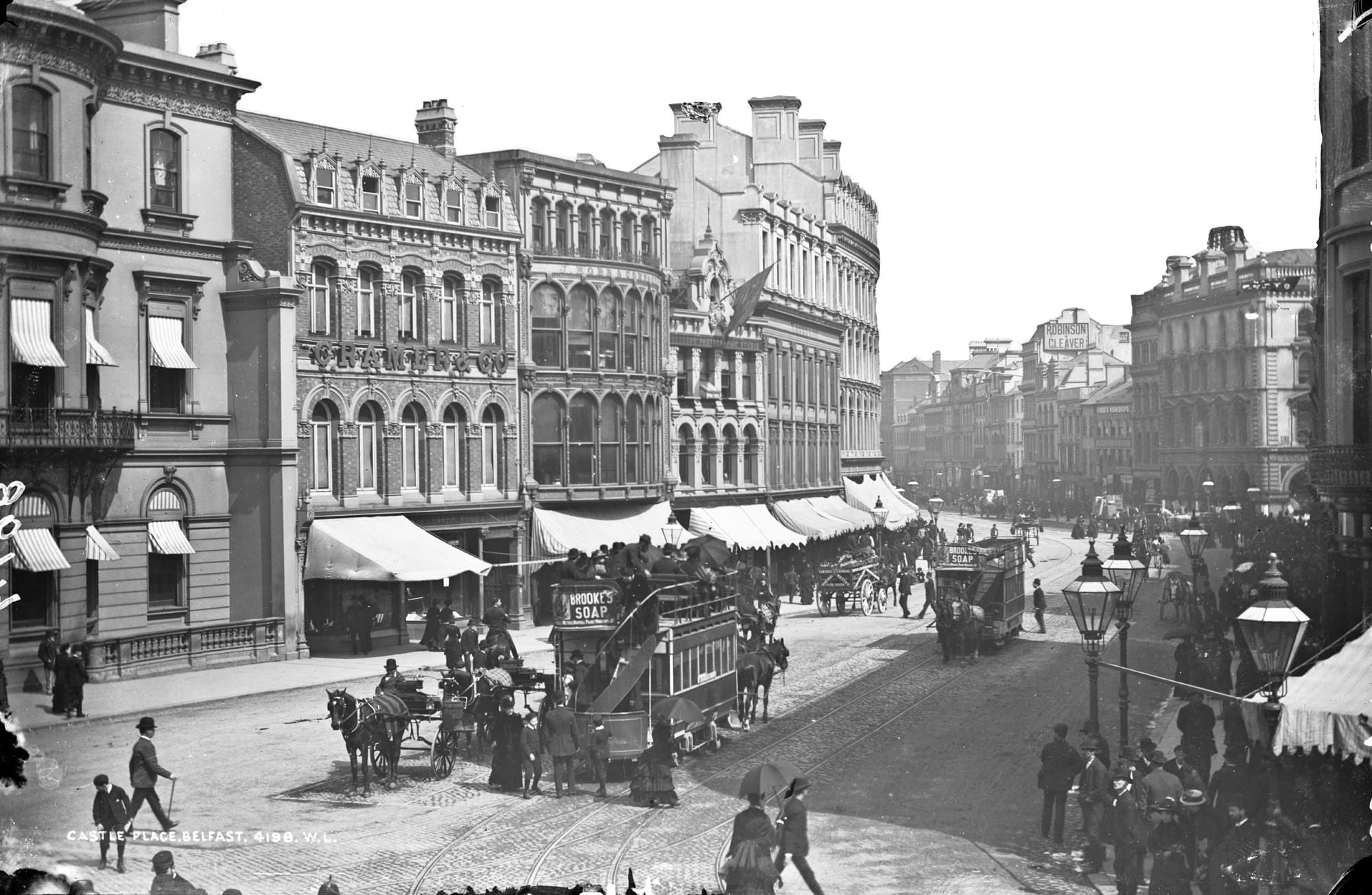
The horse-drawn omnibus was a large carriage running fixed routes on fixed schedules. It appeared in Paris in 1828 and quickly spread to other major cities. It was, in concept, recognizably modern: a shared vehicle, a published timetable, a fixed fare. But horses were expensive, slow, and produced prodigious quantities of waste. A city of one million horses, as London approached by the late 19th century, was a city perpetually on the edge of a sanitation crisis. The urban transport problem was also, urgently, a public health problem.
The electric tram changed everything. First introduced commercially in the 1880s, it combined the fixed-route logic of the omnibus with the speed and cleanliness of electric traction. By 1900, tram networks laced the streets of virtually every major city in Europe and North America. The effect on urban form was profound. Tram lines extended the accessible radius of the city center, allowing working-class neighborhoods to develop along corridors that were previously too far to walk. The city grew, but it grew in a structured way: along lines, not in all directions equally.
The tram was the first technology to make mass urban mobility genuinely democratic. For a flat fare within reach of a factory worker's wage, it offered access to employment, markets, and social life across the entire city, not just the neighborhood within walking distance.
This democratization of access was not incidental. It was, as Glaeser argues in Triumph of the City, one of the mechanisms by which the industrial city, in spite of all its misery and inequality, also became an engine of social mobility. Proximity to opportunity matters only if you can reach that opportunity. The tram made the city's concentration of jobs, schools, and services legible and reachable to a far larger share of the population than had ever been possible before. The transport network was not merely infrastructure, it was a social equalizer, however imperfect.
The automobile century: freedom, sprawl, and the city remade
The automobile arrived not as a solution to a transport problem, but as a consumer product. Unlike the railway and the tram, both of which were conceived as public or quasi-public infrastructure, the car was sold, from the outset, as an instrument of individual freedom. Henry Ford's Model T, introduced in 1908, did not promise to connect neighborhoods or reduce congestion. It promised liberation from fixed routes and fixed schedules, from the shared discomforts of public transit, from the spatial constraints of the city itself.
That promise was enormously seductive, and it reshaped the 20th-century city more profoundly than any previous transport technology. As car ownership spread through the middle classes, accelerated in the United States by mass production, cheap fuel, and aggressive road-building programs, urban form began to change in ways that would have been unrecognizable to a 19th-century planner. Cities spread outward. Densities fell. The suburb, once a compromise between urban access and rural space, became the dominant mode of settlement across the industrialized world.
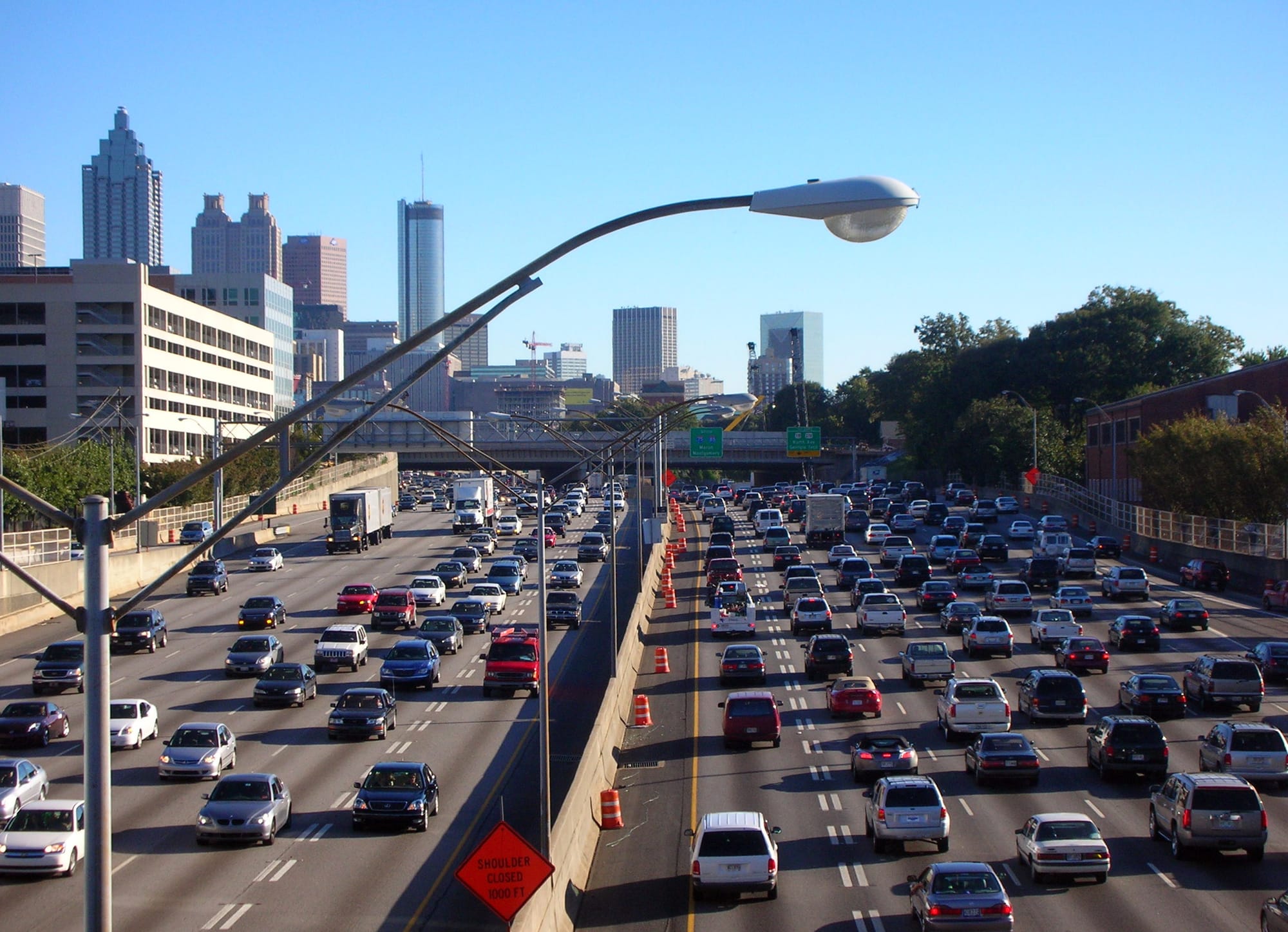
Perceived as a "superior" mode due to comfort, speed, and safety (for the drivers), cars started to claim all road space. The infrastructure followed the vehicle. Robert Moses in New York, and his equivalents across dozens of cities, dismantled neighborhoods to build expressways, redesigned downtowns around parking, and reorganized entire metropolitan areas according to the logic of the automobile. Vuchic, writing in Urban Transit, describes this period as one in which the car's demands on urban space became effectively unlimited: wider roads generated more traffic, which required wider roads still, in a cycle that consumed enormous quantities of urban land and public investment with diminishing returns in actual mobility.
The great paradox of the automobile century is that the technology promised to provide more comfortable and faster trips instead produced less of it — congestion at a larger scale, across a wider geography, and at a far higher cost to the users.
Long-term consequences: a complete mindset towards cars
Practical consequences extended well beyond congestion. As cities sprawled and densities fell, transit became economically unviable in large portions of the metropolitan area: too few passengers per kilometer to justify the cost of service. The populations least likely to own cars (the poor, the elderly, the young) found themselves progressively stranded in areas designed exclusively for those who did. The original sin of unequal access, which we traced to the uneven distribution of natural resources in prehistory, had found a new and particularly durable form: the car-dependent city, in which mobility and opportunity were rationed by automobile ownership.
During the 1950s, transport engineering emerged as a formal discipline. Born not from a neutral desire to undestand movement, but from an urgent, specific, and politically loaded mandate: keep the cars flowing. What we now call transport engineering began, in practice, as traffic engineering: a techinical whose central metric was vehicle speed, whose benchmark was the level of service on arterial roads, and whose default solution to any congestion problem was more infrastructure. Pedestrian, cyclists, and transit users were not ignored so much as simply not counted: absent from the equations, the design standards, and the professional formation of an entire generation of engineers.
The consequences proved extraordinarily durable. Long after the intellectual case for automobile-centric planning has been dismantled by many actors such as Jane Jacobs, by the energy crises in the 1970s, by decades of evidence on induced demand, the built environment it produced remained, and so did the engineer trained to maintain and replicate it. Infrastructure last for decades. Mental models can last ever longer. The car did not jsut reshape the city; it reshaped the professional imagination of those responsible for planning it, embedding a particular vision of what mobility means — FAST, INDIVIDUAL, MOTORIZED — into policy, into textbooks, and into the common sense of millions of urban residents who have never questioned why their city feels the way it does. That bias, and the slow effort to correct it, is one of the central stories of contemporary transport planning.
The underground city: metro systems and the logic of mass transit
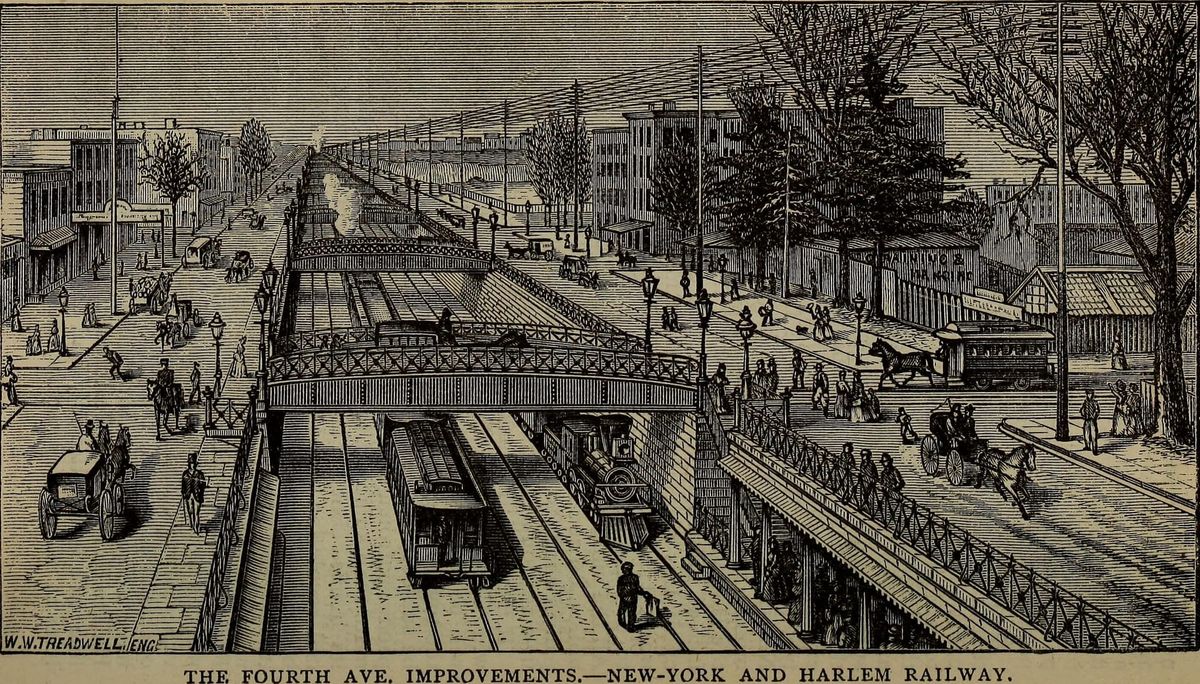
The automobile was not the only response to the scale problem of the industrial city. Beneath the congested streets, a different kind of infrastructure was taking shape. London opened the world's first underground railway in 1863 — initially steam-powered, and by all accounts extraordinarily unpleasant to ride. The electrification of the system in the 1890s transformed it into something recognizably modern, and the model spread rapidly: Budapest in 1896, Paris in 1900, New York in 1904, Buenos Aires in 1913.
The metro represented a fundamentally different approach to urban mobility than the automobile. Where the car responded to demand by expanding the road network, the metro concentrated demand into high-capacity corridors and moved it at speeds impossible on congested surface streets. Where the car required each passenger to own and operate a complex machine, the metro separated the act of movement from the responsibility of operating the vehicle. And where the car consumed urban land at an accelerating rate, the metro moved underground, leaving the surface city largely intact.
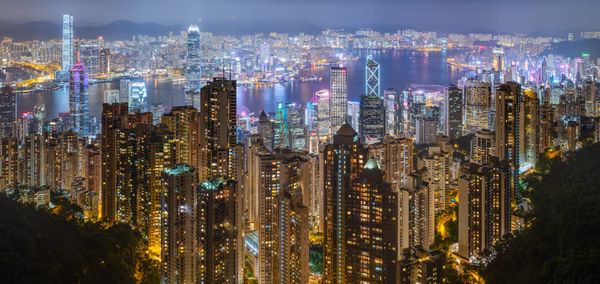
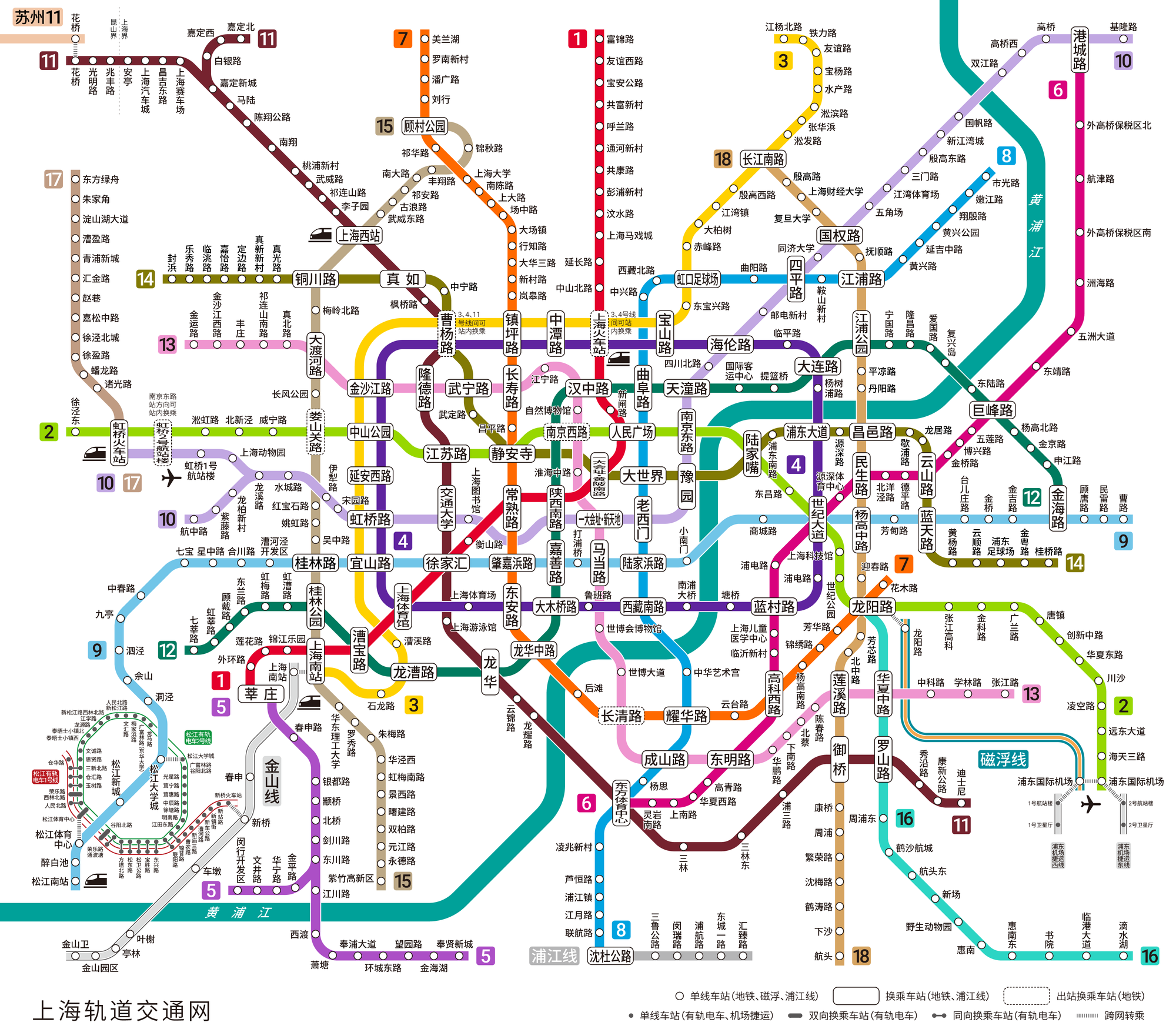
Metro systems also reshaped urban geography in ways that parallel the earlier effects of the railway and the tram. Station areas became focal points for commercial and residential development. Cities organized themselves, over time, around the network — with density highest near stations and declining toward the periphery. In cities like Tokyo, Paris, and Hong Kong, the metro became so deeply integrated into daily life that the network map and the mental map of the city became, for most residents, the same thing.
Yet metro systems carried their own limitations. They were expensive to build, slow to extend, and served only the densest corridors of the largest cities. For the sprawling, low-density metropolitan areas produced by automobile-led development, the metro offered no solution. The 20th century ended with two parallel urban realities: dense, transit-rich city cores where the car was increasingly unnecessary, and vast suburban peripheries where it remained the only viable means of movement.
The century's balance sheet
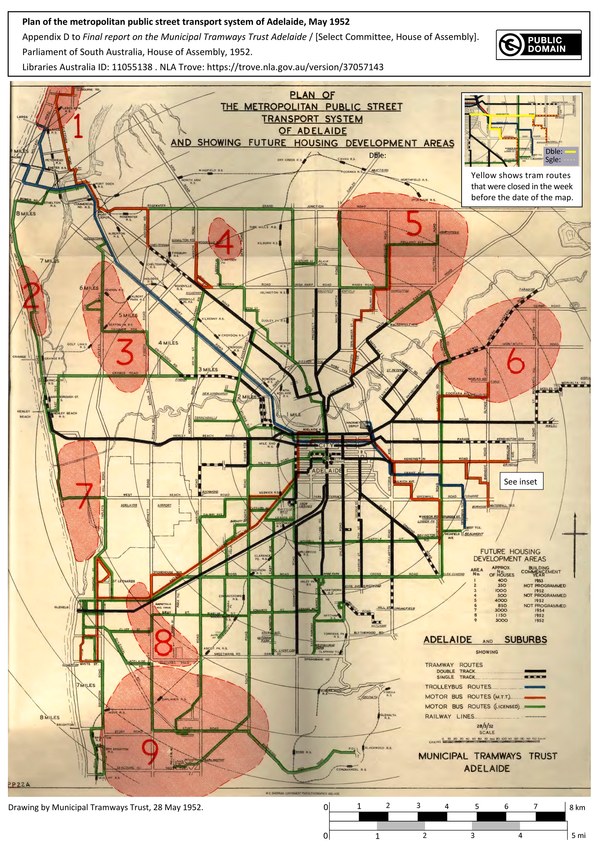
By the close of the 20th century, the industrial city had become the global city. Urbanization, which had accelerated through the 19th century in Europe and North America, was now transforming Asia, Africa, and Latin America at a pace and scale that dwarfed anything the Industrial Revolution had produced. In 1800, roughly 3% of the world's population lived in cities. By 2000, that figure had crossed 47%. And it was still rising.
The transport technologies of the industrial era, the railway, the tram, the automobile, the metro, had made this concentration possible. But they had also bequeathed a set of problems that no 19th-century engineer had anticipated: chronic congestion, carbon emissions, spatial inequality, the fragmentation of communities by infrastructure, the near-total dependence of entire metropolitan regions on a single mode of transport. The city had solved the threshold problem of the medieval era and created, in its place, a new set of thresholds: harder to see, more complex to navigate, and impossible to address with any single technology.
What the industrial era also produced, almost as a byproduct, was the discipline that would spend the next century trying to make sense of all of it. Transport engineering emerged not from a theoretical tradition but from the pressure of real cities with real problems: the need to move millions of people safely, efficiently, and equitably through spaces that had never been designed for the purpose. The tools, the models, and the methods that define the field today are, in the most direct sense, the children of the industrial city's failures as much as its successes.
Understanding those tools requires understanding the cities they were built to serve. And those cities — the megacities of the contemporary world, with their ten, twenty, thirty million inhabitants — are where we turn in the final essay of this series.
References
Vuchic, V. R. (2007). Urban Transit: Operations, Planning and Economics. John Wiley & Sons.
Glaeser, E. (2011). Triumph of the City: How Our Greatest Invention Makes Us Richer, Smarter, Greener, Healthier, and Happier. Penguin Press.